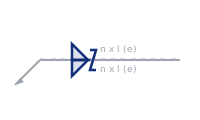
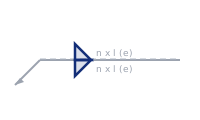
Chain intermittent fillet weld
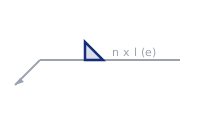
Applied to joint
T-joint — fillet welds both sides
Download
Shop
Wire for fillet welds
ER70S-6 and flux-cored options commonly used for structural T-joints.
→ weldingandwelder.com
Description
Intermittent fillet welds on both sides of a joint with the weld elements aligned directly opposite each other (in chain pattern). Both sides have the same pitch and the welds are in the same longitudinal positions.
In plain English
Intermittent fillets on both sides, but the welds line up -- the one on top is directly opposite the one on the bottom. Like links in a chain, hence the name. This gives a balanced pattern of heat input and is used where you need intermittent welds on both sides but want symmetry for appearance or to balance distortion.
Symbol position
Fillet symbols on both sides of the reference line, aligned. Intermittent notation on both sides.
Size notation
Same conventions as intermittent fillet, shown on both sides of the reference line.
Notation examples
Same notation differences as intermittent fillet. The chain alignment is shown the same way in both standards (aligned symbols on both sides of the reference line).
Weld elements shown aligned on both sides of the reference line.
Identical pitch and alignment indicated. Both sides use n x l (e) format.
Common uses
- Web-to-flange joints on plate girders
- Double-sided stiffener attachments
- Symmetrical structural members
- Connections where balanced distortion is important